The Surprising History of Golf Card Game (It's Not What You Think)
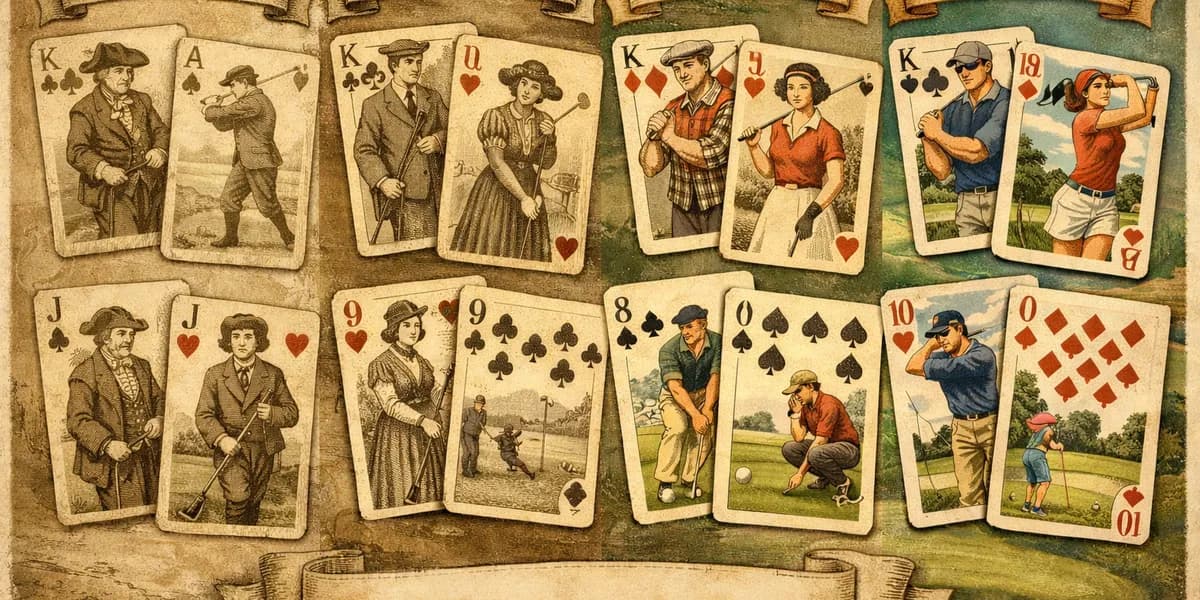
When you first hear "Golf card game," you probably assume it has something to do with the sport of golf—maybe it was invented by golfers, or uses golf terminology, or has some connection to the green. Here's the thing: it doesn't. Not at all. The true origin story of Golf card game is way more interesting, mysterious, and surprisingly underground than you'd expect.
Unlike games like Poker or Rummy, which have well-documented histories and clear lineages, Golf card game exists in a historical gray area. We know it exists, we know people have been playing it for generations, but tracing its exact origins is like trying to follow a trail that's been walked over too many times. What we do know, however, tells a fascinating story of cultural transmission, adaptation, and the way games evolve when they're passed down through families and communities rather than through official channels.
This is the story of how a simple card game with a confusing name became a beloved pastime, survived decades in relative obscurity, and is now experiencing a digital renaissance. It's a story that involves Polish immigrants, prison culture, college dorms, and the internet. Let's dive in.
The Name Mystery
The first question everyone asks: why is it called "Golf"? The game has nothing to do with clubs, balls, or greens. The connection is purely conceptual: like golf, the goal is the lowest score. That's it. But how did that name stick? Historians have theories, but definitive proof is hard to come by.
Theory 1: Scottish Origins — Some believe the game originated in Scotland (home of golf the sport) and the name was a natural connection. Scottish card games have a long tradition, and the "lowest score wins" concept would have resonated with a golf-playing culture. However, there's no historical documentation to support this theory. It's plausible, but unproven.
Theory 2: Polish "Gofas" Game — This is where it gets interesting. There's a Polish card game called "Gofas" (or variations like "Gof" or "Golfas") that shares striking similarities with Golf card game. The rules are nearly identical: arrange cards in a grid, flip them, swap to minimize score. Many historians believe Golf card game is actually an anglicized version of Gofas, brought to America by Polish immigrants in the late 19th or early 20th century. The name "Gofas" might have been misheard or simplified to "Golf," and the connection to the sport (lowest score) made the name stick.
Theory 3: Lowest Score Connection — The simplest theory: someone invented the game, noticed the "lowest score wins" similarity to golf, and named it accordingly. This could have happened anywhere, at any time. The name is intuitive once you understand the scoring, so it's possible the name came first and the game was designed around it, or vice versa.
What Historians Actually Know: Not much, honestly. Unlike games with official rulebooks or documented tournaments, Golf card game spread through oral tradition. Families taught families, friends taught friends. There are no early rulebooks, no newspaper articles about tournaments, no official records. What we know comes from personal accounts, regional variations, and the game's presence in different cultures. The truth is probably a combination of all these theories—the game likely has multiple origins that converged into what we know today.
Golf's Cousins Around the World
One of the most fascinating aspects of Golf card game is how many regional variations exist. These aren't just different rule sets—they're evidence of how the game spread and adapted to different cultures. Each variation tells a story of how the game was passed down and modified.
Polish Roots (Gofas)
The Polish version, Gofas, is considered by many to be the original. It uses the same 2x3 grid, same scoring system, same pair rules. Polish families have been playing this for generations, and it's still popular in Polish communities today. The game likely came to America with Polish immigrants, where it was anglicized and renamed.
Nine Holes Variant
The "Nine Holes" name is a direct reference to golf—nine rounds, like nine holes on a golf course. This variant is particularly popular in the American Midwest and South, where it was likely introduced by Polish immigrants and then adapted. The name makes the golf connection explicit, which might be why it stuck in English-speaking regions.
Four Card Golf
The 4-card variant (2x2 grid, 6 holes) is a simplified version that's perfect for quick games. This variation likely emerged as people wanted faster games or were teaching children. It maintains all the core mechanics but reduces complexity, making it more accessible.
Regional Variations
Other names and variations exist: "Turtle" (in some regions), "Polish Poker" (though it's not poker at all), and various local names. Some versions use jokers, some have different scoring for pairs, some allow horizontal pairs in addition to vertical ones. These variations show how the game evolved organically as it spread, with each community adding their own twist.
How Golf Spread Globally
Golf card game didn't spread through official channels, rulebooks, or tournaments. It spread the old-fashioned way: person to person, family to family, community to community. This grassroots transmission created a fascinating history of how the game moved through different subcultures.
Prison Card Games (Seriously) — This might sound surprising, but prisons have been a major vector for card game transmission. Inmates have limited entertainment options, and card games are perfect: they require minimal equipment, can be played for hours, and provide mental stimulation. Golf card game, with its simple rules and strategic depth, became popular in prison communities. When people were released, they brought the game with them, teaching it to friends and family. This underground transmission is part of why the game's history is so hard to trace—it wasn't documented, it was just played.
College Dorms in the 1960s — The 1960s and 70s saw a card game renaissance on college campuses. Students had time, decks of cards, and a need for social activities. Golf card game, with its quick rounds and strategic gameplay, was perfect for dorm life. It spread from campus to campus as students graduated and took the game with them. Many people who play Golf today learned it in college, often from roommates or friends who learned it from someone else.
Digital Era: Yahoo Games to Web Apps — The internet changed everything. In the early 2000s, Yahoo Games and similar platforms offered digital versions of Golf card game, making it accessible to people who had never encountered it before. Suddenly, you didn't need someone to teach you—you could learn online. Today, web apps like ours are continuing this tradition, making the game even more accessible and introducing it to new generations.
Why It Remained Underground — Unlike Poker or Rummy, Golf card game never had a professional tournament circuit, official rulebooks, or major commercial backing. It remained a "folk game"—passed down through communities rather than formalized. This is both a strength (it stayed true to its roots) and a weakness (its history is undocumented). But this underground status is also part of its charm. When you play Golf, you're participating in a tradition that's been kept alive by players, not by corporations.
Modern Renaissance
Golf card game is experiencing something of a renaissance right now, and it's happening for several interesting reasons that reflect broader cultural trends.
COVID Lockdown Card Game Revival — When the pandemic hit and people were stuck at home, there was a massive resurgence of interest in card games. Families rediscovered games they hadn't played in years. Golf card game, with its simple setup and quick rounds, was perfect for lockdown entertainment. People taught it to their kids, played it over video calls, and shared it with friends. The game found a new generation of players.
Gen Z Discovering "New" Old Games — Generation Z has a fascination with retro and vintage culture, and that extends to games. They're discovering classic card games that their parents and grandparents played, but with fresh eyes. Golf card game, with its simple rules and strategic depth, appeals to a generation that values both nostalgia and mental challenge. It's "new" to them, but it has the authenticity of something that's stood the test of time.
Digital Versions Making It Accessible — Modern web apps are making Golf more accessible than ever. You don't need someone to teach you—you can learn online, play against AI, and practice at your own pace. This removes the biggest barrier to entry: finding someone who knows how to play. Digital versions also introduce features like score tracking, statistics, and multiple variants, making the game more engaging for modern players.
Competitive Golf Card Game? — While Golf has never had a professional circuit, there are growing communities of competitive players. Online forums, Discord servers, and casual tournaments are emerging. Some players track their statistics obsessively, trying to beat personal bests and compete with others. It's unlikely Golf will ever become as competitive as Poker, but the community aspect is growing, and that's exciting for the game's future.
Cultural Impact
Golf card game might not have the cultural footprint of Poker or Bridge, but it has carved out its own niche. Its impact is quieter, more personal, but no less meaningful.
References in Media — Unlike Poker, which appears constantly in movies and TV, Golf card game rarely gets screen time. When it does appear, it's usually in the background—a family playing cards, friends in a dorm room. This low profile is actually fitting for a game that has always been more about personal connection than public spectacle.
Family Traditions — For many families, Golf card game is a tradition passed down through generations. Grandparents teach grandchildren, parents teach children. It's not a game you learn from a book—it's a game you learn from someone who cares about you. This personal transmission creates emotional connections to the game that go beyond just entertainment. When you play Golf, you're participating in a family tradition, even if you learned it online.
Perfect for Modern Attention Spans — In an age of short-form content and constant stimulation, Golf card game is perfectly suited to modern attention spans. Games are quick (15-20 minutes), engaging, and provide just enough challenge to be satisfying without being overwhelming. It's the perfect antidote to endless scrolling—a focused, strategic activity that fits into busy modern lives.
The cultural impact of Golf card game isn't measured in tournaments or media appearances. It's measured in the quiet moments: families playing together, friends bonding over a game, individuals finding a mental challenge they enjoy. That might not make headlines, but it's meaningful in its own way.
The history of Golf card game is a story of cultural transmission, adaptation, and persistence. It's a game that survived not through official channels, but through the dedication of players who loved it enough to teach it to others. From Polish immigrants to prison communities to college dorms to digital platforms, Golf has found its way into the lives of countless players.
What makes this history special is its mystery. We don't know exactly where it started or how it got its name, but we know it's been played for generations, and that's enough. The game doesn't need a documented origin story to be meaningful—its meaning comes from the connections it creates and the enjoyment it provides.
When you play Golf card game today, you're participating in a tradition that spans cultures, generations, and continents. You're playing a game that has been passed down through families, taught in dorm rooms, and shared in communities. That's a pretty special thing, even if we can't trace every step of its journey.
Be Part of the Tradition
Join the generations of players who have enjoyed this classic game. Play now and become part of the story.